SMILE Pro: lenticule extraction in about 9 seconds of laser time
SMILE Pro is the 2023 generation of SMILE, performed on the ZEISS VISUMAX 800 - a platform approved with SMILE pro software by the U.S. FDA in January 2024 for nearsightedness, with or without astigmatism. The laser pass takes about 9 seconds per eye, the incision is 2 mm, and GS Eye Center has performed SMILE Pro on 15,000+ eyes as of April 2026.
What is SMILE Pro?
SMILE itself dates to 2006, built on ZEISS optics. SMILE Pro keeps the same flapless, small-incision lenticule extraction and delivers it with a newer laser with shorter laser treatment time and tools that assist the surgeon with alignment.
Faster cut speeds
The VISUMAX 800 completes the laser pass in about 9 seconds per eye - under 10 seconds, versus about 30 on the earlier VISUMAX 500.
Visual-axis centration
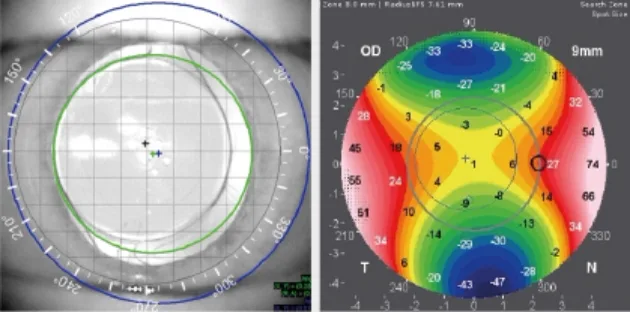
Real-time navigation keeps the treatment centered on your individual visual axis, not just the geometric center of the pupil.
Cyclotorsion alignment assistance
OcuLign recalculates the treatment pattern to help the surgeon account for rotational misalignment of the eye. The surgeon checks alignment before treatment.
Femtosecond laser
VISUMAX 800 is the ZEISS femtosecond laser used for SMILE pro. It creates a lenticule within the cornea for the surgeon to remove through a small incision.

Introduced at GS in 2023 with a dedicated SMILE Pro operating suite. GS was designated a ZEISS SMILE pro CENTER the same year.
Why does a 9-second laser pass matter?
ZEISS reports lenticule creation in under 10 seconds for myopia with a 6.5 mm optical zone. This is the laser step, not the whole operation. Shorter laser time alone does not establish a lower complication risk compared with another platform.
How suction loss is managed
During SMILE, suction holds the eye in position. Loss of suction can interrupt treatment. The surgeon assesses the stage of treatment and decides how to proceed; the published review discusses several management options. A shorter laser pass does not eliminate this possibility.
Source: Wan KH, et al. Options and results in managing suction loss during small-incision lenticule extraction. J Cataract Refract Surg. 2021;47(7):933-941. Review of management options.
- The manufacturer's timing describes lenticule creation under specified settings.
- Positioning, docking and lenticule removal are separate parts of the operation.
- Complication risk and recovery require their own clinical assessment.
- ZEISS technical information and timing conditions
How do the alignment aids work?
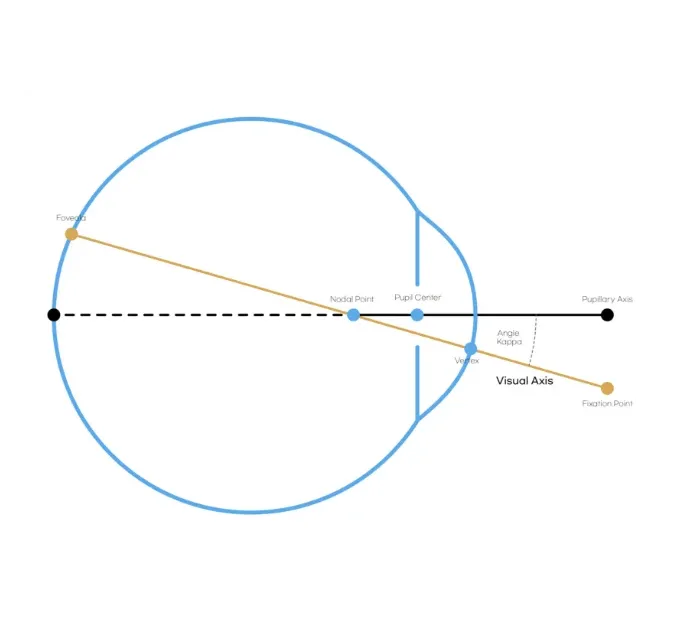
Surgery centered on your visual axis
Your visual axis - the line connecting what you look at to the center of your retina - rarely matches the geometric center of your pupil. CentraLign displays the visual axis measured at your exam in real time ("Visual Axis Assisted Navigation"), so the surgeon fixes suction on your individual axis before the laser starts. The clinic credits visual-axis centration for sharper post-op vision.
Assistance with rotational alignment
OcuLign assists the surgeon with cyclotorsion alignment by recalculating the treatment pattern. This is an alignment aid; it does not mean continuous automatic eye tracking or replace the surgeon's alignment check. Whether your prescription is suitable is confirmed at the in-clinic exam. ZEISS OcuLign description.
How does SMILE Pro compare to its siblings?
GS runs all three lenticule platforms, so the comparison below is between procedures the clinic actually performs - not a sales chart against things it does not offer.
| SMILE Pro | SMILE LASIK | SILK | |
|---|---|---|---|
| Laser platform | ZEISS VISUMAX 800 | ZEISS VISUMAX 500 (two systems) | Johnson & Johnson ELITA |
| Laser pass per eye | About 9 seconds (under 10) | About 30 seconds | Low-energy pass, 1 μm spots |
| Incision | 2 mm, no flap | 2 mm, no flap | Small-incision lenticule, no flap |
| Axis alignment | CentraLign + OcuLign alignment aids | Surgeon-guided | Post Docking Alignment |
| Lenticule | ZEISS SMILE geometry | ZEISS SMILE geometry | Bi-convex design |
| At GS since | 2023 | 2016 | 2025 |
| U.S. FDA | VISUMAX 800 with SMILE pro: Jan 2024 | Initial approval: 2016; expanded indications: 2018 | — |
Details on the other two: SMILE LASIK · SILK · or see why GS runs all three.
Names the clinic has published for SMILE Pro
As published on GS Eye Center's Korean site. Individual results vary.
SMILE Pro questions
SMILE Pro uses a newer laser with shorter lenticule creation time. OcuLign assists with rotational alignment, and CentraLign assists the surgeon with centration during docking. The surgeon checks alignment before treatment. The 2 mm incision and flapless lenticule technique are the same.
SMILE first received U.S. FDA approval in 2016, with expanded indications in 2018. VISUMAX 800 with SMILE pro software received approval in January 2024 for nearsightedness, with or without astigmatism. These are U.S. regulatory records. Eligibility in Korea depends on the applicable local labeling and your eye examination.
SMILE pro can treat eligible patients with myopia and astigmatism. OcuLign recalculates the treatment pattern to assist the surgeon with rotational alignment. Your examination and the applicable local labeling determine whether your prescription is in range. ZEISS product information.
ZEISS scanning technology. The clinic describes its precision as comparable to a laser fired from Earth landing inside a coin-sized area on the Moon. Per the clinic, raw pulse speed alone is not enough - a platform's scanning has to keep up for the whole pass to finish this quickly.
Shorter laser time alone does not establish faster recovery or less post-operative dryness compared with another platform. Recovery varies by individual, and your surgeon sets expectations at the exam. For what the weeks after look like, see our SMILE Pro explainer and the international patient journey.
There is no fixed number of days that fits everyone. The stay depends on your examination results and on the follow-up your surgeon sets. Your coordinator maps the exam, surgery and follow-up dates onto your travel window before you book flights. For the planning model, see how long to stay in Seoul.
Before you leave Seoul, your coordinator prepares an English record of your surgery, exam data to share with your eye doctor at home, and a messaging line back to the clinic. Your surgeon sets your follow-up plan individually. See After You Fly Home and how follow-up care works across the Pacific.