SILK: the smooth, low-energy take on lenticule surgery
SILK (Smooth Incision Lenticular Keratomileusis) is a small-incision lenticule procedure in the same family as SMILE, performed on the Johnson & Johnson ELITA laser. It shapes the lenticule with 1-micrometer spots at about 40 nanojoules per pulse, and GS introduced the platform in 2025 alongside a dedicated SILK operating suite.
What is SILK?
Like SMILE, SILK corrects vision by removing a thin lenticule of corneal tissue through a minimal incision - no flap. The difference is how the lenticule is made: the ELITA separates it with bridgeless, ultra-fine laser spots at very low energy, which is where the "silk" in the name comes from.
Bi-convex lenticule
Both faces of the lenticule are convex. Per the clinic's materials, this design helps prevent folds and micro-wrinkles inside the cornea after removal, reduces higher-order aberrations and supports corneal nerve regeneration.
1 μm laser spots
Ultra-fine spots produce a smoother, more even lenticule surface - the ELITA's headline capability, per Johnson & Johnson.
About 40 nJ per pulse
Described by the manufacturer as the lowest pulse energy among lasers currently in use. Lower energy means less thermal stress on surrounding tissue.
Post Docking Alignment
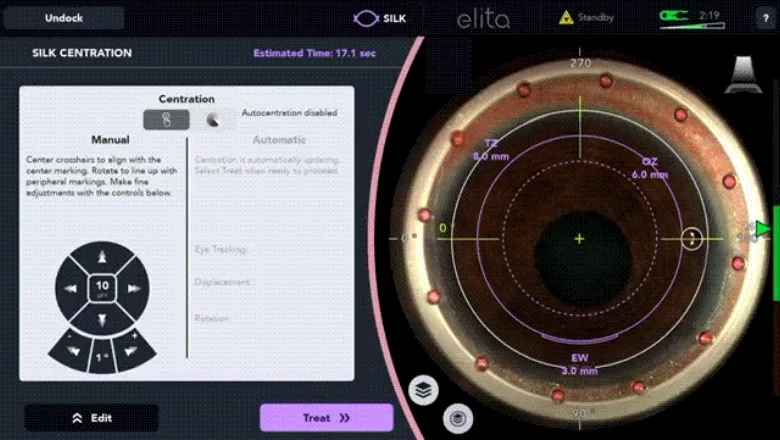
The centration and astigmatism axis can still be fine-tuned after suction is applied - plus stable docking on flatter corneas and electronic fixation that reduces pressure on the eye.
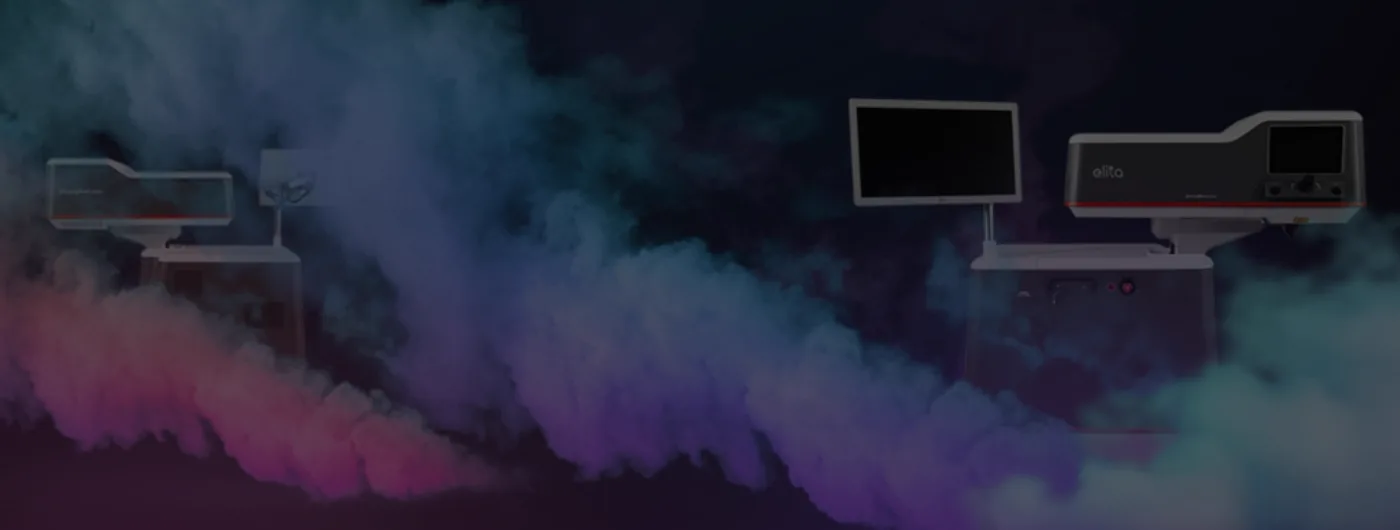
Released in 2020, introduced at GS in 2025 with an operating suite built for SILK. GS was designated a SILK TRAINING Center in 2026.
What does a 40 nJ pulse actually change?
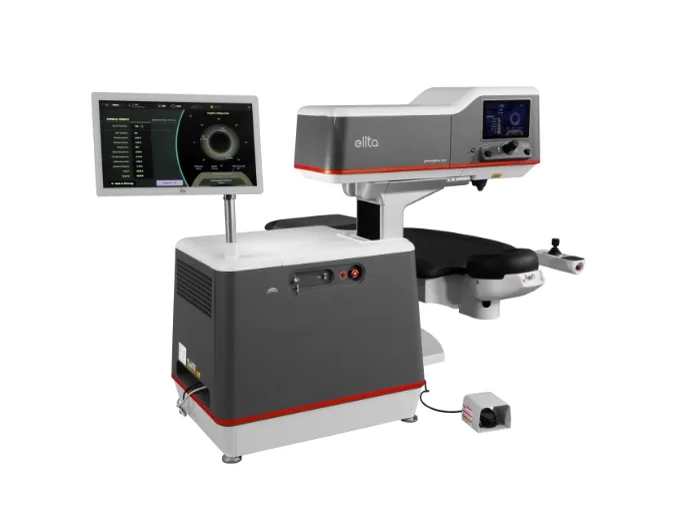
Less energy, less collateral stress
Per the manufacturer's published materials, working at roughly 40 nanojoules per pulse minimizes heat and damage to surrounding tissue and reduces keratocyte activation - the cell response linked to inflammation and corneal haze. The clinic pairs that with two structural points: the laser interface sits toward the bottom of the lenticule, sparing more corneal nerves, and Bowman's layer is preserved as much as possible for structural stability.
- Bridgeless spot separation frees the lenticule smoothly, with less surgical manipulation, swelling and inflammation
- Lower corneal nerve damage is the mechanism the manufacturer's materials link to reduced post-op dryness
Depth checked in real time
Every docking glass differs slightly in thickness. Auto-Z recognizes those differences at sub-micron scale, compensates for them, and monitors Z-axis movement in real time during the procedure - so the laser cuts at the intended corneal depth, reducing the risk of over- or under-correction.
After docking, the surgeon can still refine centration and the astigmatism axis (Post Docking Alignment) before treating.
SILK vs. SMILE Pro: what is different?
| SILK | SMILE Pro | |
|---|---|---|
| Laser platform | Johnson & Johnson ELITA | ZEISS VISUMAX 800 |
| Signature trait | 1 μm spots at ~40 nJ, bridgeless separation | Laser pass in about 9 seconds |
| Lenticule | Bi-convex, interface toward the lower face | ZEISS SMILE geometry |
| Alignment | Auto-Z + Post Docking Alignment | CentraLign + OcuLign, real time |
| At GS since | 2025, dedicated SILK suite | 2023, dedicated SMILE Pro suite |
Both are flapless small-incision lenticule procedures. Which one fits your eyes is a diagnostic question - see how GS matches platform to patient or compare with SMILE Pro and SMILE LASIK.
SILK questions
Same family, different maker. Both remove a thin lenticule through a minimal corneal incision without a flap. SMILE runs on ZEISS VISUMAX lasers; SILK runs on the Johnson & Johnson ELITA, with its own lenticule design (bi-convex) and laser characteristics (1 μm spots, about 40 nJ per pulse).
Per the manufacturer's materials, lower pulse energy reduces heat and stress on surrounding corneal tissue and dampens keratocyte activation, which is associated with inflammation and haze. The intended result is a smoother lenticule surface and a calmer healing course.
The manufacturer's published materials link SILK's design - the bi-convex lenticule and an interface positioned to spare more corneal nerves - to a lower chance of post-operative dryness. Whether that applies to your eyes depends on your tear film and cornea, which are measured at the pre-op exam.
You don't have to decide alone. GS keeps all three lenticule platforms in-house precisely so the choice can follow your diagnostics rather than the clinic's equipment list. Send your prescription through the consultation form and the medical team will pre-screen which options fit before you travel.