SMILE LASIK: the flap-free procedure GS has run for a decade
SMILE LASIK combines the flap-free approach of surface procedures with the fast recovery of LASIK. A thin lenticule is removed through a 2 mm incision - no corneal flap - and the clinic clears patients for most routine activities the next day. GS has performed it on the ZEISS VISUMAX 500 since 2016.
What makes SMILE third-generation?
Laser vision correction has moved through three approaches. Each generation changed how the cornea is opened - and that single difference drives pain, recovery time and impact resistance.
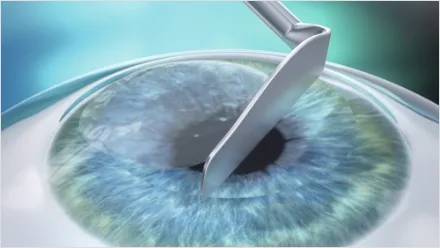
The corneal epithelium is removed before the laser works. Trade-offs: significant pain, a long recovery and possible corneal haze.
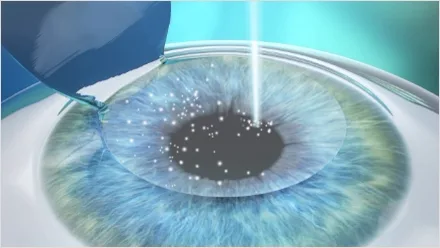
A corneal flap is cut and folded open. Faster recovery, but the flap stays vulnerable to impact and dry eye can follow.
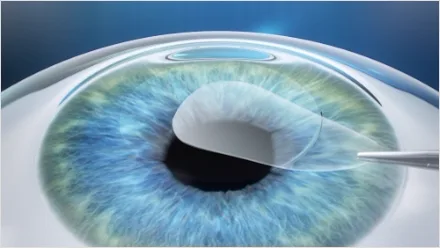
No flap. A thin lenticule is removed through a 2 mm micro-incision. The clinic cites fast recovery, minimal reported pain, impact resistance, and lower rates of haze, dry eye and ectasia.

Conventional correction opens roughly 24 mm of cornea. SMILE opens 2 mm.
Why does a 2 mm incision matter?
Corneal nerves pass through the area a laser procedure opens. A conventional incision of about 24 mm cuts across many of them, which is a main reason dry eye follows some vision correction. SMILE's 2 mm incision reduces corneal nerve damage to roughly one tenth, which the clinic credits for the lower rate of post-operative dry eye it observes.
No flap also means nothing to dislodge. That is why the clinic recommends SMILE to patients heading into military service, basketball, soccer and other contact sports - it pairs the no-flap strength of LASEK with the fast recovery of LASIK.
Routine activities allowed from the day after surgery:
- Washing your face, showering, washing your hair
- Driving
- Phone and computer screens
- Skin and eye makeup
What does it run on?
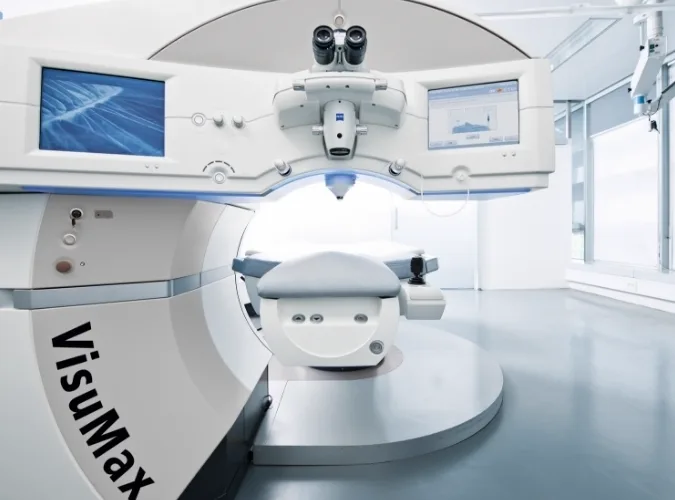
Two lasers, one dedicated suite
GS introduced the VISUMAX 500 in 2016 and built a dual-system setup plus a dedicated SMILE operating suite in 2019. The femtosecond laser class behind VISUMAX is the technology recognized by the 2018 Nobel Prize in Physics, and SMILE received U.S. FDA approval in 2018.
- VISUMAX 500 laser pass: about 30 seconds per eye
- Same 2 mm flapless lenticule technique as SMILE Pro
- ZEISS recognized GS's SMILE volume with a Korea "1 Million" contribution plaque (2023) and a worldwide "10 Million" plaque (2024)
Want the newer, faster laser? See SMILE Pro on the VISUMAX 800. GS also offers Golden SMILE, its refined SMILE LASIK protocol - covered on the Golden SMILE page.
Names the clinic has published for SMILE LASIK
As published on GS Eye Center's Korean site. Individual results vary. More on the patient stories page.
SMILE LASIK questions
SMILE does not create a corneal flap, so there is no flap to displace by rubbing. The clinic cites this as a reason the procedure suits patients with an eye-rubbing habit - though your surgeon will still tell you to be gentle while healing.
This is the group the clinic highlights for SMILE. With no flap, the cornea is more resistant to external impact, which is why athletes and patients heading into military service tend to prefer it over flap-based LASIK.
Any corneal surgery affects the tear film, but SMILE's 2 mm incision spares far more corneal nerve tissue than a conventional 24 mm opening - roughly ten times less nerve damage, per the clinic. That is the mechanism behind its lower reported dry-eye rates. Your tear film is checked at the pre-op exam.
Per the clinic, from the day after surgery: washing your face, showering, washing your hair, driving, screens, and skin or eye makeup. Individual healing varies, and your surgeon confirms timing at your follow-up.
Same technique, different laser generation. SMILE Pro (VISUMAX 800) runs the laser pass in about 9 seconds with automatic axis alignment; SMILE LASIK (VISUMAX 500) takes about 30 seconds with surgeon-guided alignment. The right fit depends on your eyes and is decided at the exam - see the SMILE Pro page or our procedure comparison guide.