Presbyopia fixed. Natural lens untouched.
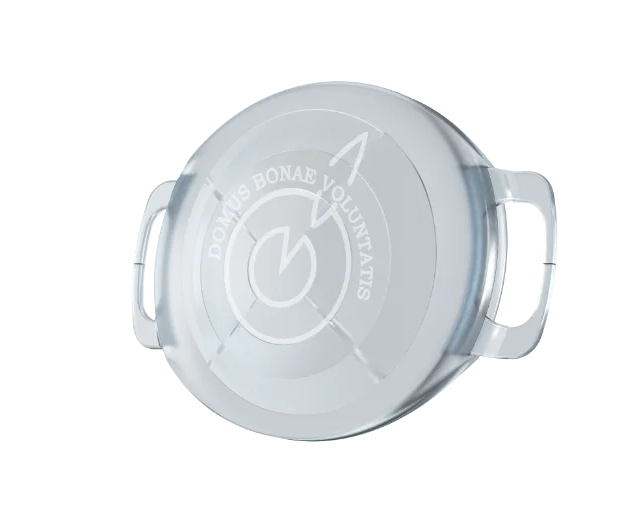
ArtiPLUS is a multifocal phakic lens implant for presbyopia. Placed in the anterior chamber - in front of your natural lens - it leaves the cornea and lens untouched and can be removed later. It targets people in their 40s and 50s who have presbyopia but no cataract.
What makes ArtiPLUS different?
Until recently, people in their 40s and 50s had two realistic answers to presbyopia before a cataract arrived: reading glasses, or laser monovision. ArtiPLUS adds a third - a multifocal lens implanted between the cornea and iris while everything you were born with stays in place.
- Near, intermediate and far vision secured
- CTF technology applied to reduce post-operative glare
- Natural lens preserved - unlike cataract surgery
- Additional correction possible after monofocal cataract surgery
- Possible after previous LASIK or LASEK
- Presbyopia corrected without multifocal cataract surgery
- Reversible - the lens can be removed to return to your pre-surgery state
Where does ArtiPLUS fit in?
Laser monovision
An excimer laser reshapes the corneal stroma. It delays reading glasses rather than removing the need, and it works by trading some distance balance between the eyes.
Multifocal cataract surgery
Replacing the natural lens with a multifocal IOL treats presbyopia thoroughly - but not until a cataract exists to justify removing the lens.
ArtiPLUS
A presbyopia-correcting multifocal lens placed in the anterior chamber, using an implant approach with four decades of clinical history. No cataract required, nothing removed.
Its lineage is explicit: ArtiFLEX, OPHTEC's anterior chamber phakic implant, combined with the multifocal optics of the Precizon cataract lens - producing ArtiPLUS, a multifocal anterior chamber implant.
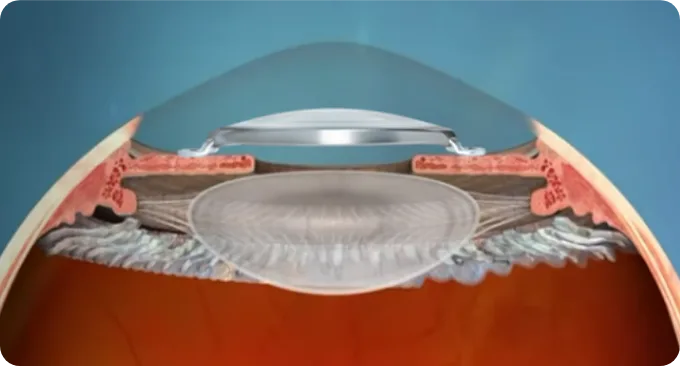
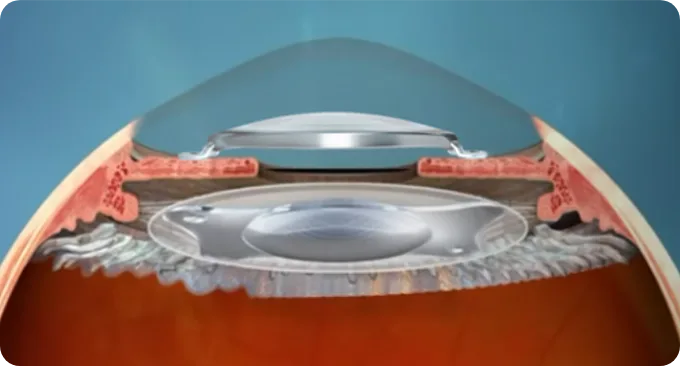
Where exactly does the lens go?
Between the cornea and the iris - the anterior chamber. Your own crystalline lens stays where it is, directly behind.
Which option belongs to which age?
The clinic's published map of correction options by life stage - and the gap ArtiPLUS was brought in to fill.
| Stage | Typical age | Options |
|---|---|---|
| Vision correction years | 20s-40s | SMILE LASIK, LASIK, LASEK, lens implantation (ICL) |
| Presbyopia years | 40s-50s | Previously: laser monovision, reading glasses, or putting up with it. Now also: ArtiPLUS |
| Cataract years | 50s-60s+ | Multifocal or monofocal cataract surgery, reading glasses |
Is ArtiPLUS for me?
The clinic describes two groups it suits. The final answer always comes from the precision exam.
Presbyopia in your 40s-50s, no cataract
You want vision correction despite your age bracket, you want presbyopia treated without cataract surgery, and you want your natural lens preserved as long as possible. ArtiPLUS addresses presbyopia while leaving the lens for later decades.
Monofocal IOL, but near vision still bothers you
You had monofocal cataract surgery, remain unsatisfied with your vision, want presbyopia corrected too, or find reading glasses a burden. ArtiPLUS can be added in front as an additional correction.
ArtiPLUS FAQ
Yes - this is one of ArtiPLUS's defining traits. Because the cornea and natural lens are preserved, the implant can be removed if it proves uncomfortable, returning the eye to its pre-surgery state.
Previous LASIK or LASEK does not rule ArtiPLUS out - the clinic lists prior laser correction patients among those who can receive it. Your corneal history is reviewed in the exam.
Then ArtiPLUS is not the tool - a developing cataract is treated with cataract surgery, where a multifocal IOL can correct presbyopia in the same procedure. ArtiPLUS exists for the years before that point.
Yes. If you had monofocal cataract surgery and still struggle up close, ArtiPLUS can be implanted in the anterior chamber as an additional correction - one of the two candidate groups the clinic describes.
The clinic began performing ArtiPLUS implantation in 2023, and OPHTEC awarded it the ARTIPLUS Expert Certificate in 2025. Ask in your consultation to have the procedure history explained for your case.