How retinal disease is treated at GS
Retinal disease at GS Eye Center is treated three ways: medicine injected into the eye, laser applied to the retina, and 25-gauge sutureless vitrectomy with same-day admission, surgery and discharge. Retina specialists choose and perform the treatment themselves, matched to your condition and its stage.
What happens during an eye injection?
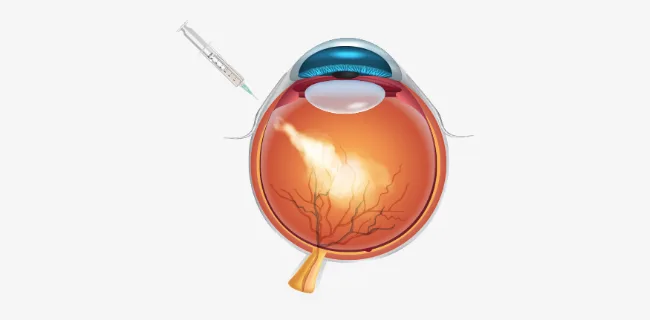
After the area around the eye is disinfected and the eye is numbed with anesthetic drops, the medicine is injected directly into the vitreous cavity. Two families of medicine are used:
- Anti-VEGF antibody injections - antibodies that neutralize vascular endothelial growth factor (VEGF), the main driver of abnormal new vessels and vascular leakage, to hold back vision loss. Several sessions are usually needed; afterward you use antibiotic drops and follow the care instructions.
- Steroid injections - reduce retinal swelling and clear inflammation. Because eye pressure can rise, regular follow-up checks are important.
What does retinal laser actually do?
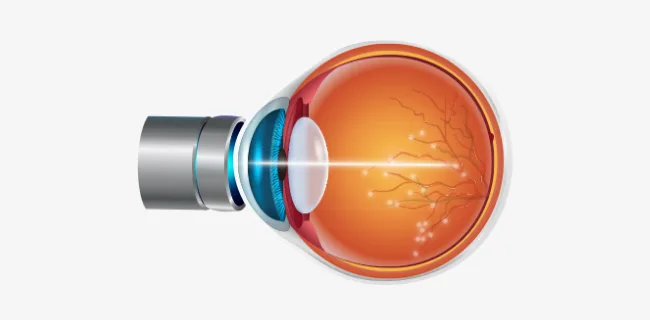
The laser is applied directly to the retina. It does two jobs:
- Destroys abnormal new vessels before they bleed or leak further.
- Seals around retinal tears - the laser creates adhesion around a retinal hole so the tear cannot widen into something worse.
Laser is used across conditions such as diabetic retinopathy, retinal vein occlusion and central serous chorioretinopathy - see the conditions page for where it fits.
Is retinal surgery a hospital stay?
Not at GS. Vitrectomy here uses a 25-gauge probe - 0.5 mm across, thinner than an ordinary injection needle - to remove the vitreous and treat the retina beneath. Because the incisions need no sutures, admission, surgery and discharge all happen on the same day.
- Generally no posture restriction after surgery.
- Exception: macular hole and retinal detachment cases receive a gas or silicone-oil fill. Expect about 2-3 weeks of reduced vision, face-down positioning, and care when washing your face.
Surgery runs on the Alcon Constellation micro-incision platform under the ZEISS Lumera 700 microscope - both covered on the equipment page.
Which treatment for which condition?
| Treatment | How it works | Used for |
|---|---|---|
| Anti-VEGF injections | Antibody neutralizes VEGF to stop abnormal vessel growth and leakage; usually several sessions | Macular degeneration, diabetic retinopathy, retinal vein occlusion, myopic CNV, central serous chorioretinopathy |
| Steroid injections | Reduce retinal swelling and inflammation; eye pressure monitored at follow-up | Retinal swelling and inflammation, per specialist assessment |
| Laser | Destroys new vessels; creates adhesion around tears to stop them widening | Diabetic retinopathy, retinal vein occlusion, dislocated IOL, central serous chorioretinopathy, retinal tears |
| Vitrectomy (25 G, sutureless) | Removes the vitreous through 0.5 mm incisions, then treats the retina; same-day discharge | Epiretinal membrane, macular hole, retinal detachment, diabetic retinopathy, dislocated IOL |
What are the risks of vitrectomy?
Reported complications after vitrectomy include a rise in eye pressure, cataract, bleeding, and - with recurrence - macular edema, endophthalmitis or low eye pressure. With advances in equipment and medication these are uncommon, and when they occur they can be treated immediately. Your surgeon walks you through the risks that apply to your case before anything is scheduled.
Questions about retinal treatment
Anti-VEGF injection therapy usually takes several sessions rather than one. The exact schedule depends on your condition and how it responds, which your retina specialist tracks with follow-up imaging.
The eye is numbed with anesthetic drops and the area is disinfected before the injection is given into the vitreous cavity. After the procedure you use antibiotic drops and follow the aftercare instructions you are given.
Only for certain operations. Most vitrectomy patients have no posture restriction. If you are treated for a macular hole or retinal detachment, a gas or silicone-oil fill is placed in the eye, and face-down positioning matters for the result - along with about 2-3 weeks of reduced vision and care when washing your face.
Vitrectomy at GS is sutureless, through 25-gauge (0.5 mm) incisions, so admission, surgery and discharge happen on the same day. There is no overnight stay.
A retina-trained specialist examines you, reads your imaging and performs the treatment personally - injections, laser or surgery. Meet the team on the Why GS Retina page, or start a free consultation.