Type "LASIK in Korea" into any forum and you get two kinds of answers: enthusiastic recommendations and warnings from people who feel it is reckless to have elective eye surgery abroad. Both camps are reacting to the same underlying problem: from the United States, it is hard to verify a Korean clinic. You cannot walk in, the reviews are in another language, and you may not know how the medical system works.
This guide addresses that verification problem directly. It explains how Korea regulates eye surgery, then lists the specific things worth checking about any clinic - surgeons, devices, hygiene, and honesty about risk. Where we cite GS Eye Center's own numbers, each one comes from published clinic records, so you can hold us to the same standard.
How is eye surgery regulated in Korea?
Korea runs a national physician licensing system, and ophthalmology is a formal specialty: after medical school, a doctor completes residency training in ophthalmology and passes board examinations to practice as an ophthalmology specialist. The Korean term is 안과전문의, and it is the first credential to ask about, because clinics are not required to have every procedure performed by a specialist surgeon of that field.
There is a second layer that matters specifically for international patients. Under Korean law, medical institutions that attract foreign patients and the agencies that recruit them must each hold the relevant registration. GS Eye Center's international marketing and coordination is handled by Portzone Co., Ltd., a registered foreign patient attraction agency. A-2026-01-01-07030 is Portzone's agency registration number, and it appears in the footer of every page on this site; an agency's registration covers the agency, not the hospital. When you evaluate any Korean clinic's international program, ask for the registration that applies to each party - it is a legal requirement, not a nice-to-have.
Devices are regulated separately. The laser platforms used for SMILE, LASIK, and LASEK in Korea are models sold internationally, and you can check each model's regulatory status yourself. The ZEISS VISUMAX 800 used for SMILE Pro, for example, received U.S. FDA approval with the SMILE pro software in January 2024 for nearsightedness with or without astigmatism, per the ZEISS press release and coverage in Healio. That is a U.S. regulatory record; eligibility in Korea depends on the applicable local labeling and your eye examination. GS Eye Center began using the platform in 2023, before the U.S. approval.
What should you verify about the surgeons?
Ask three questions of any clinic: Who exactly will operate on me? Are they a board-certified ophthalmologist? What is their standing in the professional community? A trustworthy clinic answers with names and verifiable facts, not slogans.
Here is how GS Eye Center answers. The clinic has seven board-certified ophthalmic surgeons, each listed by name with their credentials on the doctors page. Two examples of the kind of detail you should expect anywhere:
- Dr. Kim Muyeon, the director, is a board-certified ophthalmologist with a doctorate in medicine. He graduated from the Catholic University of Korea College of Medicine, held a professorship post at the Catholic Medical Center, and is a member of ASCRS, ESCRS, and KSCRS (the American, European, and Korean cataract and refractive surgery societies).
- Dr. Kim Jinhyung holds a doctorate in medicine, serves as a director of the Korean Society of Cataract and Refractive Surgery, reviews manuscripts for the international journals JCRS and Cornea, and trained at institutions including UC San Diego's Shiley Eye Institute.
The point is not that these credentials make complications impossible. The point is that they are checkable: society memberships, journal roles, and university affiliations leave public traces. If a clinic will not name its surgeons or their qualifications in writing, treat that as your answer.
Does the equipment generation actually matter?
Yes, for a practical reason: the device model tells you what the clinic invested in and which technique variations it can offer. Ask which specific platform will be used for your procedure, then look the model up yourself on the manufacturer's site.
GS Eye Center publishes its full device list on the equipment page. For laser vision correction it operates the ZEISS VISUMAX 800 (SMILE Pro), two ZEISS VISUMAX 500 units (SMILE LASIK, and flap creation for LASIK), the Johnson & Johnson ELITA (SILK, a separate procedure), and the SCHWIND AMARIS RED 1050s (surface ablation). Each entry names the maker and model, so you can look up the specifications and regulatory status yourself and ask which platform the exam points to for your eyes.
One caution in the other direction: newer hardware does not substitute for surgical judgment. A clinic that leads with machines but will not discuss candidacy limits or complication management is showing you a showroom, not a practice.
What about hygiene and the facility?
Infection control is unglamorous and rarely marketed, which makes it a useful test: clinics that take it seriously tend to document it. Ask how instruments are sterilized and whether the operating rooms are dedicated to eye surgery.
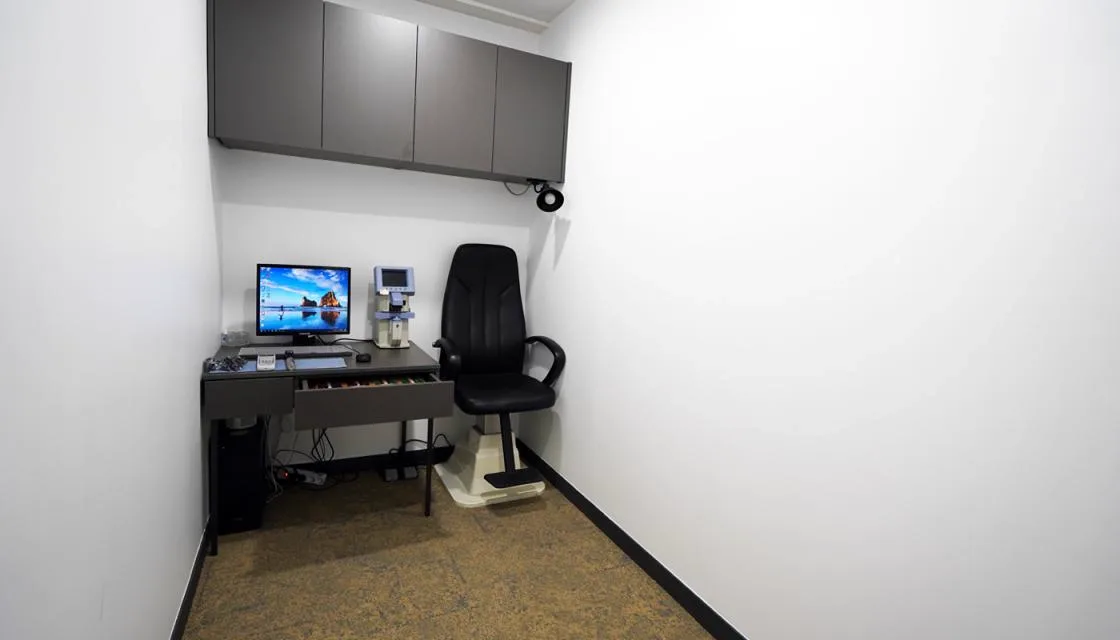
GS Eye Center publishes a six-part safety system on its clean system page: air purification, EO gas sterilization of instruments, an uninterruptible power supply intended to keep a laser pass from being interrupted by a power failure, autoclave plus STATIM high-pressure steam sterilization, forced ventilation, and year-round temperature and humidity control. The clinic maintains separate dedicated operating rooms for SMILE and SILK procedures.
What does surgical volume tell you - and what doesn't it?
Surgical volume shows the scale of a clinic's experience; how equipment is maintained and how difficult cases are handled are separate questions to ask. GS Eye Center has operated at the same Gangnam Station address since 2005 and reports a cumulative total of more than 300,000 eyes treated across vision correction and cataract surgery as of 2023, and 15,000+ SMILE Pro eyes as of April 2026.
What volume does not tell you is whether you personally are a good candidate. A clinic that examines you carefully and then advises against surgery is giving you useful information; a quick yes before the exam is not. GS publishes a version of this principle for cataract patients: it does not perform cataract surgery on patients who do not have cataracts.
A verification checklist you can use on any clinic
- Surgeon identity. Get the operating surgeon's name in writing and confirm board certification in ophthalmology.
- Device model. Ask for the exact platform and check its FDA or CE status on the manufacturer's site.
- Exam depth. Ask what the preoperative exam covers. At GS the screening runs to around 50 diagnostic tests, including corneal thickness and topography. Thin corneas, unstable prescriptions, and certain conditions rule procedures out, and a serious clinic will tell you so.
- Risk disclosure. Dry eye, night glare, and regression are real possibilities with any refractive procedure. A clinic that claims zero risk is not being honest with you.
- Aftercare in writing. Ask what happens after you fly home: what records you receive, whom you contact, and how questions are handled. Our approach is described in After You Fly Home.
- Agency registration. Ask which clinic or agency your coordinator represents, and verify that organization's current foreign-patient attraction registration; check the clinic's and any independent agency's registrations separately.
- Response quality. Judge the consultation itself. Detailed, patient answers to your written questions before surgery are the same behavior you will depend on after it.
The honest bottom line
Korea is a reasonable place for an American or Canadian patient to have laser vision correction, provided you verify the specific clinic the same way you would verify one at home. The system-level ingredients are in place: specialist board certification, regulated devices, a legal framework for international patients. What no country can offer is a surgery without risk. Come with your questions, expect named answers, and let the examination - not the marketing - decide whether surgery is right for your eyes.
Related pages: Why GS for SMILE · Our surgeons · Your journey as an international patient